Why Do We Recycle More at Home Than Work?
Workplace Recycling: Understanding and Improving Habits
We take a look at some of the reasons why individuals change their habits and what can be done to better facilitate recycling in the workplace. For an organization trying to achieve some lofty corporate social responsibility goals, this could be particularly helpful. For those who already have strong beliefs aligned with environmental and recycling causes, they are often going to be more effective at practicing these behaviours in any space. However, for many, the disparity in behaviours begins as people are no longer acting in a personal setting with direct motivators, but rather within an organization where they can feel they have little to no control over the facilities. Comparatively, in an office, if the distance to the appropriate recycling stream is considerably further away, they will be less inclined to make the extra effort. Desk bins, in particular, can encourage users to place all of their waste into one stream given the easy access. This lack of feedback or awareness of consumption can make individuals complacent, particularly as part of an organization.
To increase staff awareness, you could consider completing a waste audit and ongoing monitoring to provide feedback for your staff. You can even make a competition out of it to include personal or group rewards. This is similar in a workplace; individuals are going to be motivated to recycle if they see or are encouraged by others, particularly management, to practice effective recycling within the space. Further, if there is a green team or set of communications that encourage individuals to recycle their waste and consider their environmental behaviours, this adds to the feeling of being watched, which can be an extremely powerful motivator, and people tend to follow suit of those around them.
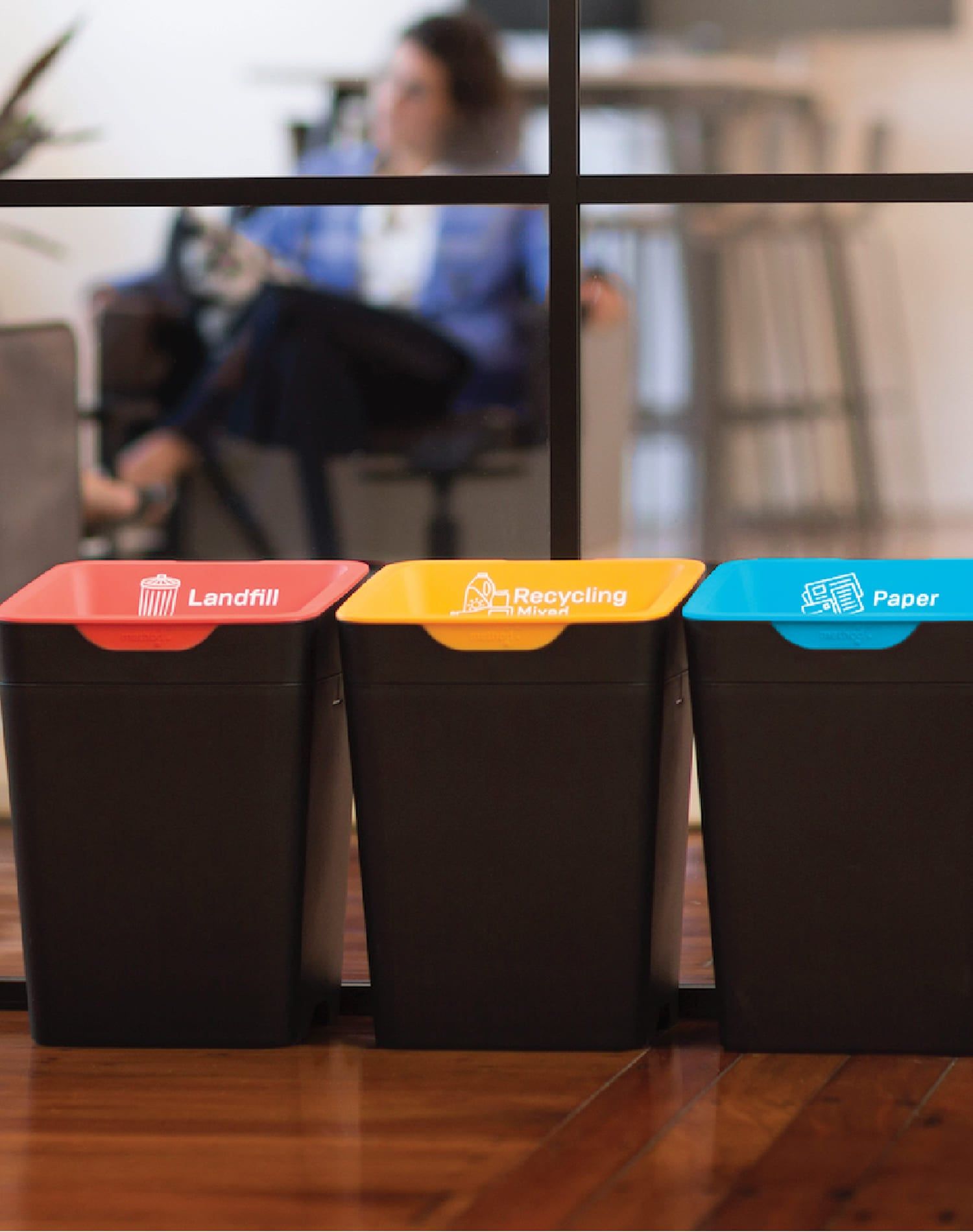
This confusion can lead to items being placed in the wrong recycling bin, or placing more recyclables in the general waste. Therefore, workplace recycling should be easily understood at a glance and be the same throughout the facility. This lack of clarity contributes to ineffective recycling practices.
Explore More Stories
Discover more insights and stories from our journal