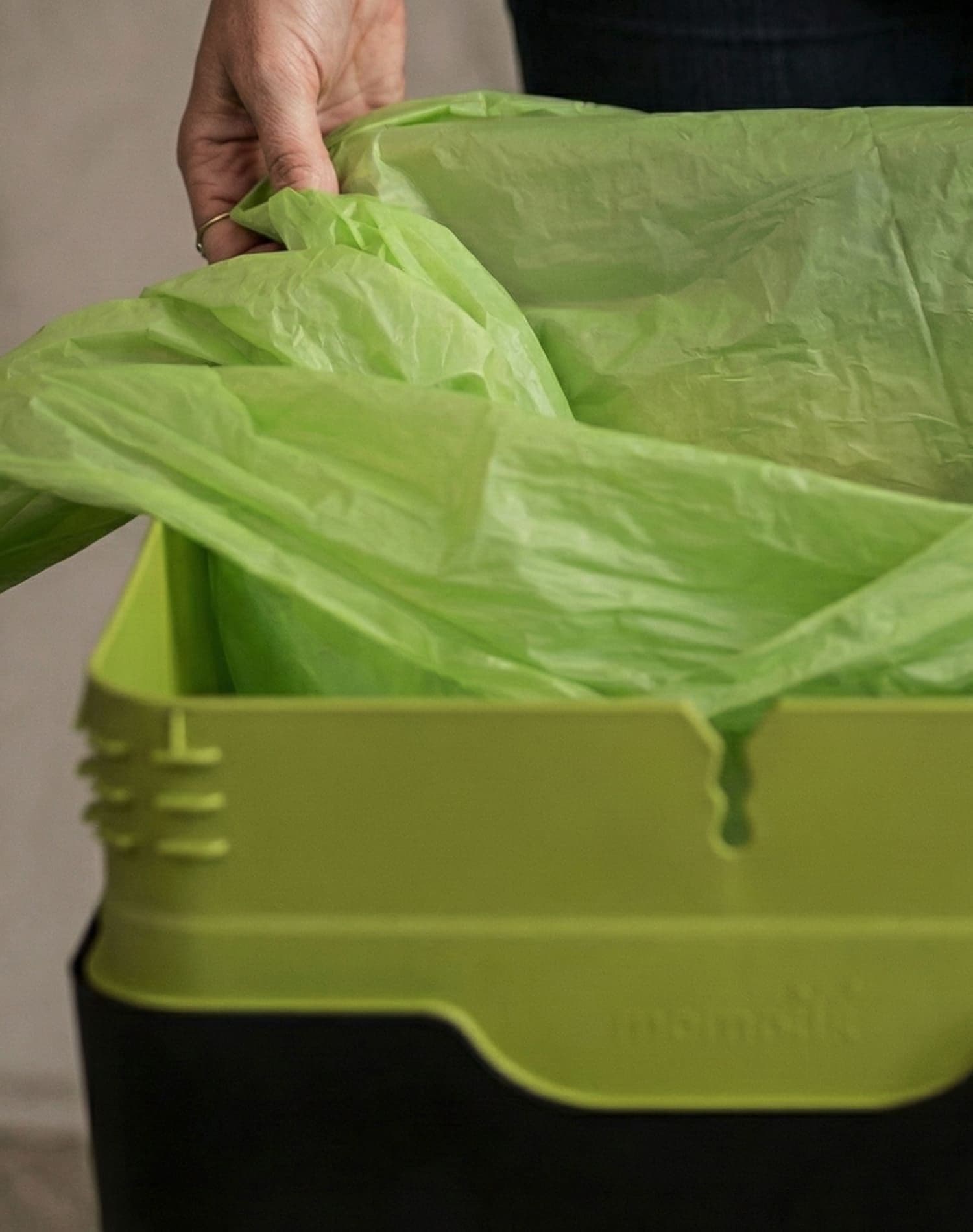
Which bin liner is the most sustainable?
Picking the most sustainable bin liner sounds simple until you read the packaging. Biodegradable, degradable, compostable and plant-based all appear on similar-looking rolls, and they mean very different things. Here is how to tell them apart in 2026.
Watch out for misleading green claims
Regulators now take vague green claims seriously. In 2025, Australia's Federal Court ordered Clorox, maker of GLAD bags, to pay an $8.25 million penalty for falsely claiming certain bags contained 50 per cent recycled ocean plastic. It was the ACCC's first court-ordered greenwashing penalty, and compostability claims are on its priority list too.
The main types of bin liner
- Conventional plastic liners. The most common, durable and cheapest option, made from fossil resources and persistent for decades or longer. Liners sold as degradable were usually just conventional plastic with additives that fragment it into microplastics. New Zealand banned these oxo-degradable plastics in October 2022, three years after banning single-use plastic shopping bags, so avoid them wherever they still appear.
- Plant-based plastic liners. Made from biomass such as sugarcane or corn rather than petroleum. Non-biodegradable versions behave exactly like conventional plastic: durable, recyclable, not compostable. Biodegradable versions can be broken down by living organisms within a certified timeframe.
- Commercially compostable liners. These break down only in commercial composting conditions, with sustained temperatures around 60 degrees. In landfill they behave much like ordinary plastic. They earn their keep in an organics stream, where a certified liner can travel with the food scraps, provided your collector accepts liners. Ask first.
So which bin liner is the most sustainable?
For general waste and recycling, a plant-based, non-biodegradable liner is usually the better pick: still plastic, but from renewable feedstock rather than fossil fuels. For organics, use a certified compostable liner only if your composting facility accepts them. Question whether every bin needs a liner at all; clean, dry recycling streams often don't. Talk to your waste contractor and cleaners before settling on anything.
Common questions
Do compostable bin liners break down in landfill?
No. They need the heat of a commercial composting facility; in landfill they persist much like conventional plastic.
What does degradable mean on a bin liner?
Usually conventional plastic with additives that fragment it into microplastics. New Zealand banned these oxo-degradable plastics in 2022, so treat the term with suspicion.
Which certifications should compostable liners carry?
AS 4736 (Australia and New Zealand) and EN 13432 (Europe) cover commercial compostability; AS 5810 covers home composting. The certification mark matters more than the word compostable.
Explore More Stories
Discover more insights and stories from our journal