Ten Ideas to Cut Recycling Contamination
Ten Ways to Reduce Office Recycling Contamination
One of the most difficult parts about having a successful recycling program in a workplace is changing user behavior, but it's essential to achieving your waste goals and creating a more sustainable workplace. Even with the best intentions, employees may not always know what can and cannot be recycled, leading to contamination in the recycling bin. This can result in valuable recyclables being rejected by processing facilities and ending up as waste rather than being reused and recycled. Reducing contamination can help conserve resources, reduce waste, and protect the environment. This article explores ten ways to help reduce office recycling contamination and positively impact the environment.
Clear and Consistent Signage
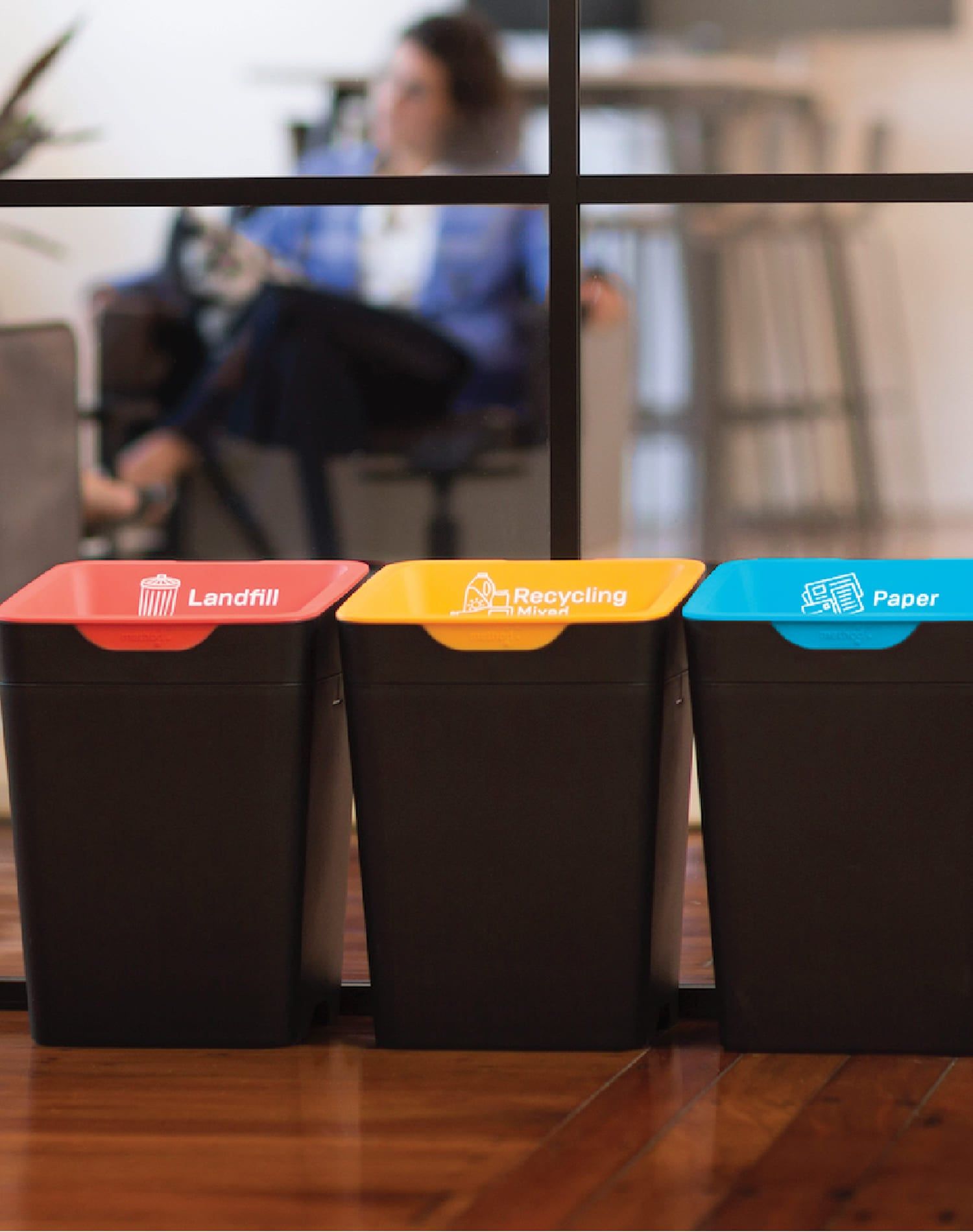
Clear signage above the recycling bins is critical to reducing contamination. The signage should include a list of items that are and aren't allowed in each bin, focusing on items that are often put in the wrong bin or that change depending on where you are - like coffee cups. In addition, ensure your signage is designed for easy understanding using relevant icons or images, accessible font, and short but specific text. Having consistent recycling bins across the site will help reduce confusion and ensure that everyone has the streams that they need available when they need to get rid of a piece of waste. Similarly, it's also important to avoid having lone bins, as this can encourage people to dump waste in them for convenience. Similarly, integrate recycling and sustainability education into the onboarding process so that people learn the do's and don'ts as they enter the space - before they pick up any bad habits.
Ongoing Education and Awareness
Ongoing education and awareness about recycling is a good way to keep recycling front of mind for your team while upskilling them. It keeps your team engaged and makes it clear that waste is important to your business and leaders. Providing an "I don't know" bin for employees to use when they're unsure if something can be recycled will help reduce contamination. This bin should be clearly marked and separated from the other recycling bins. You can then review what is ending up in the bin and use it as a specific educational opportunity.
Encourage Reusable Alternatives
Encouraging employees to use reusable alternatives to common office waste, such as coffee cups and water bottles, can help reduce the amount of waste that ends up in the recycling bin. Here are some examples:
- Provide reusable keep cups or water bottles to employees to help promote reuse.
- Integrate education on sustainable alternatives in the office into the onboarding process.
- Lead by example: Encourage senior management to promote the use of reusable alternatives.
- Encourage local cafes and eateries to provide discounts for the use of reusable alternatives.
- Ensure that catering entering the premises is utilizing reusable containers.
- When taking a team member or group out for coffee, have everyone grab a cup or container from the kitchen before you leave.
Reporting, Gamification, and Quizzes
Reporting on the progress of the office's recycling efforts can help motivate employees and keep them engaged in the process. It also helps to highlight the impact that the team is having. Gamification is the use of game mechanics in non-game contexts. Game mechanics can include competitive elements, social interaction, leaderboards, or badges. Gamifying the waste reduction process can be a fun and effective way to engage employees and reduce contamination. Consider creating a recycling challenge or competition to encourage participation.
Feedback and Continuous Improvement
Finally, it's important to ask for feedback from employees on how the waste reduction process is working for them. This will help identify areas for improvement and ensure that the process is working effectively for everyone. Recycling is a simple and effective way to reduce waste and conserve resources. Following these ten ways to reduce office recycling contamination can improve your organization's waste outputs and create a more sustainable workplace. Remember, it's never too late to start making a change. Every small change you make can have a big impact over time.
Explore More Stories
Discover more insights and stories from our journal