Method's Waste Diversion Goals
A Billion Kilogram Goal: Reducing Landfill Waste
As an innovative company, we have also looked for new ways to set big goals for ourselves. Currently, we're on a mission to enable organisations to divert one billion kilograms of waste from landfills by 2030. We're well on our way with over 75 million kgs diverted so far, but we still have work to do.
Why One Billion Kilograms?
Why did we choose one billion? It's an ambitious number for sure, but reducing or diverting that much waste would save approximately 2.31 million tonnes of CO2 equivalent emissions, an amount equal to removing 555,524 cars from the roads permanently.
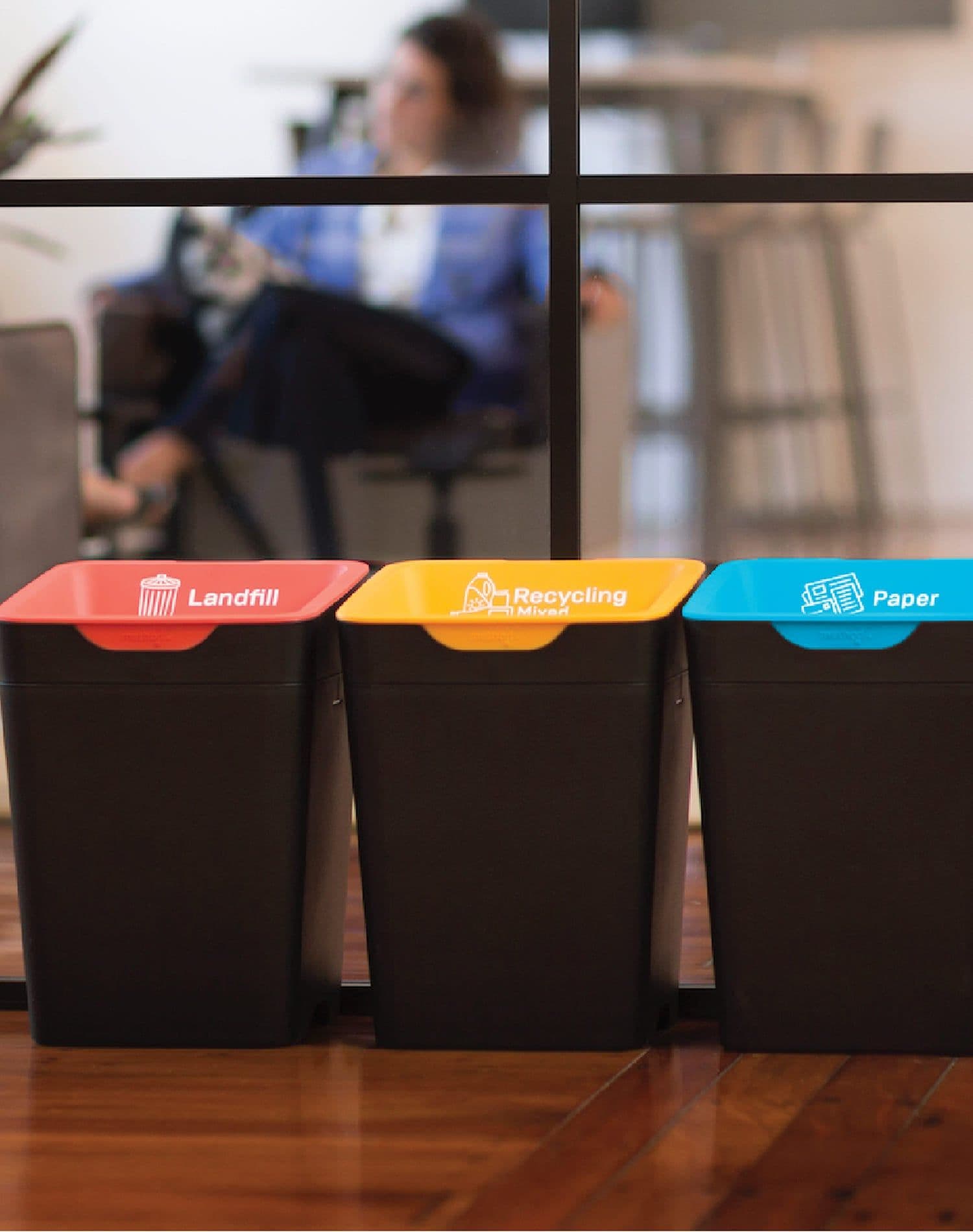
Our recycling system's design is the culmination of years of user-based research and design to enable success. We believe that beautifully designed, centralised bins will enable waste reduction and recycling to be a visible part of any workplace, which will increase diversion.
The Global Waste Problem
Currently, we live in a make-take-waste society - otherwise known as a linear economy - where countless products, packaging, and food are binned each day after we perceive they are no longer useful. This creates the growing global waste problem that is expected to reach 3.40 billion tonnes annually by 2050. Waste of this magnitude poses many social, environmental, and economic issues for people, wildlife, and nature around the world.
Waste, once it's thrown out, usually ends up in landfills, incinerated, or in our oceans, waterways, or illegal dumping sites. Landfills, even ones managed in environmentally-friendly ways, still release greenhouse gasses in large amounts that contribute to climate change.
Our Solution: A Circular Economy
At Method, we work to help other businesses to reduce or divert as much waste as possible through visible, open-plan recycling and by embracing a circular economy model. This is something we actively strive for by using recycled materials in our products and offering end-of-life solutions for our bins. In a circular economy, very little would be wasted, as most products would be reused, recycled, or decomposed in a way that is useful.
When organisations come to us with waste goals, we work with them to find recycling systems that enable them to reach those goals. We provide an array of various streams, including uncommon ones such as e-waste and soft plastics, and encourage the use of clear signage to decrease contamination.
By decreasing our waste, embracing a circular economy, and finding ways to recycle and reuse, we are actively working to reduce environmental and social harm. We've already helped many organisations all across the world reduce their waste, and we're excited to help more.
Explore More Stories
Discover more insights and stories from our journal